
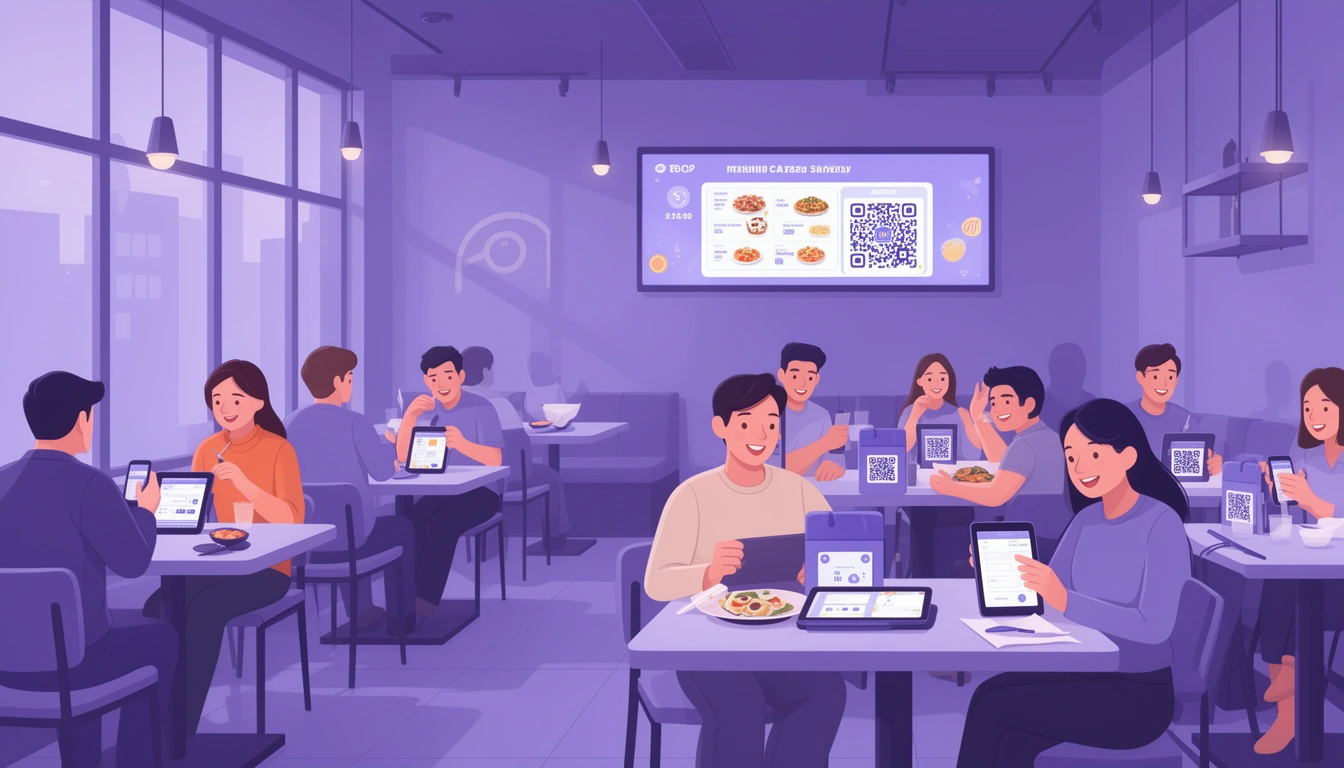
Self-service technology is revolutionizing the restaurant industry, empowering customers to take control of their dining experience while helping businesses boost efficiency and reduce operational costs. In 2026, self-service food ordering has evolved from a novelty to a necessity for restaurants looking to stay competitive.
This comprehensive guide explores everything you need to know about implementing self-service food solutions in your restaurant, from the technology options available to best practices for maximizing customer satisfaction and profitability.
What Is Self-Service Food Ordering?
Self-service food ordering allows customers to browse menus, customize their orders, and complete payments without direct staff interaction. This technology encompasses various solutions including tabletop tablets, kiosks, mobile apps, and QR code ordering systems.
Unlike traditional service models where waitstaff take orders manually, self-service systems put the power directly in customers' hands, creating a faster, more accurate ordering process that benefits both diners and restaurant operators.
Types of Self-Service Food Solutions
1. QR Code Menu Ordering
Customers scan a QR code at their table using their smartphone to access the digital menu, place orders, and pay all from their own device. This contactless solution gained massive popularity and has become a standard expectation in modern dining establishments.
2. Tablet Ordering Systems
Restaurants provide tablets at tables or counters where customers can browse the menu, view high-quality photos, customize items, and submit orders directly to the kitchen. These dedicated devices offer a premium, controlled experience.
3. Self-Service Kiosks
Freestanding touchscreen terminals positioned near entrances or ordering areas allow customers to build their orders visually. Fast-food chains and quick-service restaurants particularly benefit from kiosks during peak hours.
4. Mobile App Ordering
Branded restaurant apps enable customers to order ahead for pickup or dine-in, browse loyalty rewards, and save favorite orders for quick reordering. A restaurant mobile app creates a direct relationship with customers.
Key Benefits of Self-Service Food Ordering
Increased Order Accuracy
When customers input their own orders, miscommunication errors disappear. Special requests, dietary restrictions, and customizations are clearly documented, reducing food waste and customer complaints by up to 40%.
Higher Average Order Values
Self-service systems strategically display upsells, add-ons, and recommendations without the pressure of face-to-face interaction. Studies show that digital ordering increases average ticket sizes by 15-30% compared to traditional ordering methods.
Reduced Labor Costs
By automating the order-taking process, restaurants can redeploy staff to food preparation, customer service, and hospitality roles that truly require human touch. This optimization reduces labor costs by 20-25% while maintaining service quality.
Faster Table Turnover
Customers can order immediately upon sitting without waiting for a server, and they can request the bill instantly when ready to leave. This streamlined process increases table turnover rates by up to 30%.
Enhanced Customer Experience
Modern diners appreciate the control and convenience of self-service options. They can take their time browsing, view detailed item descriptions and images, and order at their own pace without feeling rushed.
Valuable Data Collection
Digital ordering systems automatically capture customer preferences, ordering patterns, and peak times. This data helps restaurants optimize menus, inventory, and staffing decisions.
How Digital Eatery Enables Self-Service Food Ordering
Digital Eatery provides a complete online ordering system that makes implementing self-service simple and affordable for small to medium-sized restaurants.
QR Code Self-Service
Generate unique QR codes for each table that customers scan to access your full menu. They can browse categories, customize items with toppings and special instructions, and submit orders directly to your kitchen display system all without downloading an app.
Customizable Digital Menus
Create beautiful, user-friendly menus with categories, search functionality, and appealing food images. Update items, prices, and availability in real-time across all ordering channels from one centralized dashboard.
Integrated Payment Processing
Accept payments directly through the self-service system via multiple payment methods including credit cards, digital wallets, and UPI. Customers can split bills, apply discounts, and tip all without server intervention.
Kitchen Display Integration
Orders placed through self-service channels automatically appear on your kitchen display system, eliminating manual entry and ensuring seamless communication between front-of-house and kitchen staff.
Call Server Functionality
Even with self-service ordering, customers sometimes need assistance. Digital Eatery includes a call server button that notifies staff when customers have questions or need help, providing the perfect balance of automation and personalized service.
Best Practices for Implementing Self-Service
Don't Eliminate Human Touch Completely
Self-service should enhance not replace hospitality. Staff should still greet customers, explain the system, and remain available for questions and special requests. The best implementations combine technology efficiency with human warmth.
Make Instructions Clear and Simple
Display clear signage explaining how to use the self-service system. Include visual guides at tables and train staff to proactively assist customers who appear confused, especially during the initial rollout period.
Optimize Menu Design for Digital
Digital menus require different design approaches than printed menus. Use high-quality images, concise descriptions, clear categorization, and prominent placement of popular items. Test navigation flows to ensure intuitive browsing.
Test Thoroughly Before Launch
Run extensive testing with staff and select customers before full implementation. Identify pain points, confusing elements, and technical issues. Gather feedback and refine the experience based on real usage.
Monitor and Optimize Continuously
Analyze order data to identify bottlenecks, popular items, and drop-off points in the ordering process. Use this intelligence to continuously improve menu organization, item descriptions, and user flows.
Provide Alternative Ordering Options
Always offer traditional ordering methods for customers who prefer human interaction or have difficulty using technology. Inclusive service ensures no customer feels excluded or frustrated.
Overcoming Common Self-Service Challenges
Customer Resistance
Some customers, particularly older demographics, may resist self-service technology. Address this with patient staff assistance, clear instructions, and always maintaining traditional ordering as an option. Most resistance fades once customers experience the convenience firsthand.
Technical Issues
Internet connectivity problems, device malfunctions, and software glitches can disrupt service. Choose reliable technology partners like Digital Eatery that offer cloud-based solutions with offline capabilities and responsive technical support.
Initial Setup Costs
While self-service technology requires upfront investment, the long-term savings in labor costs and increased revenue typically provide positive ROI within 6-12 months. Digital Eatery offers affordable pricing plans designed for small businesses.
Training Requirements
Staff need training not just on operating the system but on helping customers use it effectively. Invest in comprehensive training programs and create quick-reference guides for common issues.
The Future of Self-Service Food Ordering
Self-service technology continues evolving rapidly. In 2026 and beyond, expect to see AI-powered menu recommendations based on customer preferences, voice-activated ordering, augmented reality menu visualization, and even more seamless payment integration.
Restaurants that embrace self-service now position themselves as innovative, efficient, and customer-centric qualities that increasingly drive dining decisions among modern consumers.
Getting Started with Self-Service at Your Restaurant
Implementing self-service food ordering doesn't have to be complicated or expensive. With Digital Eatery, you can launch a complete self-service system in minutes:
- Sign up for a Digital Eatery account and set up your digital menu
- Generate QR codes for your tables or create a branded online ordering page
- Configure your kitchen display system to receive self-service orders
- Train your staff on assisting customers and managing the system
- Launch with clear signage and proactive customer support
- Monitor performance and optimize based on customer feedback
Conclusion
Self-service food ordering represents the future of restaurant operations, delivering measurable benefits for both businesses and customers. From increased order accuracy and higher ticket values to improved efficiency and enhanced customer satisfaction, the advantages are clear and compelling.
The key to success lies in choosing the right technology partner and implementing self-service thoughtfully with customer experience as the priority. Digital Eatery provides all the tools small and medium restaurants need to embrace self-service without sacrificing the hospitality that makes dining special.
Whether you operate a café, quick-service restaurant, or full-service dining establishment, self-service technology can help you compete more effectively, serve customers better, and build a more profitable business in 2026 and beyond.
Published with LeafPad