
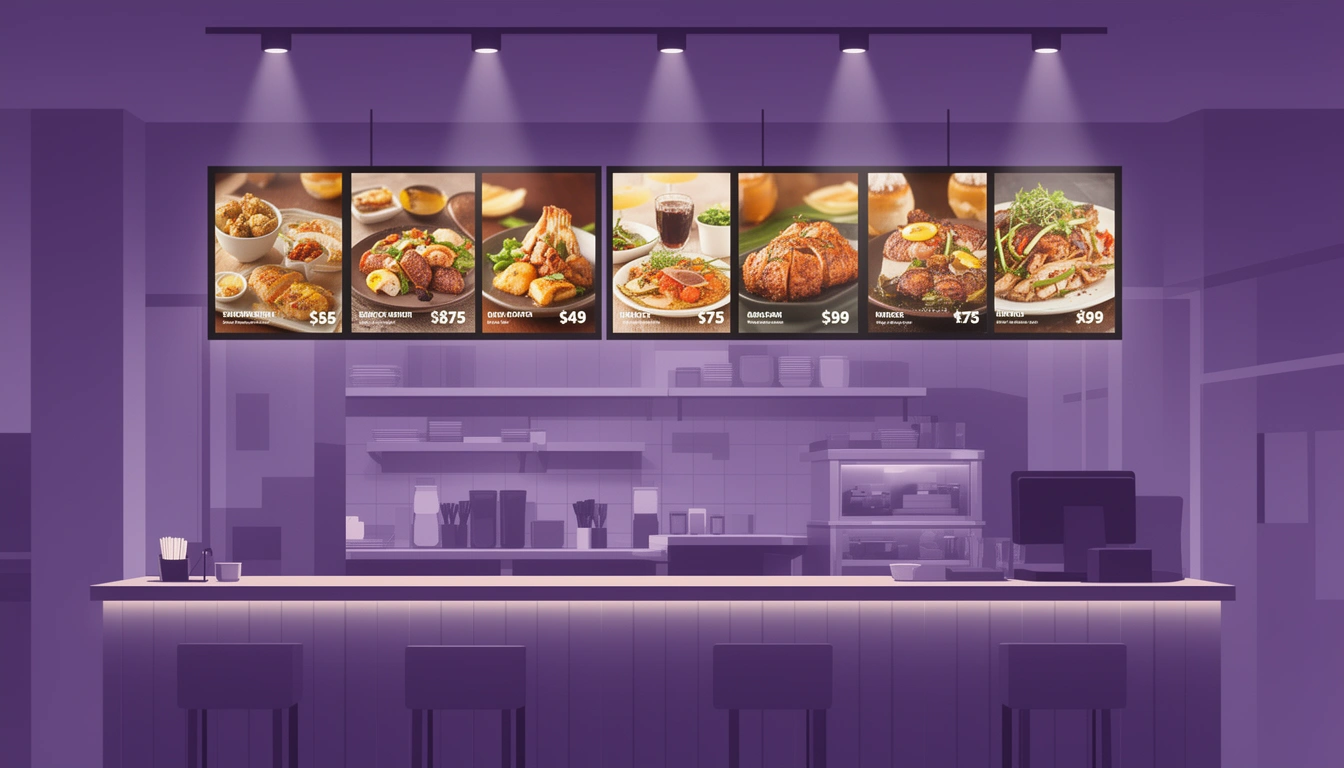
Digital menu boards have revolutionized how restaurants display their offerings, combining visual appeal with operational efficiency. If you're considering upgrading from traditional static menus to digital displays, understanding the pricing landscape is crucial for making an informed decision. This comprehensive guide breaks down digital menu board costs, features, and what you can expect to pay in 2026.
What Are Digital Menu Boards?
Digital menu boards are electronic displays that showcase your restaurant's menu items, prices, and promotions using screens instead of printed materials. These dynamic displays can be updated instantly, feature high-quality images and videos, and create an engaging customer experience that static menus simply can't match.
As part of a complete online ordering system for small businesses, digital menu boards integrate seamlessly with your POS and ordering systems to display real-time information.
Digital Menu Board Pricing Breakdown for 2026
Hardware Costs
The most significant upfront investment is the display hardware itself. Here's what you can expect:
Basic Digital Displays (32-43 inches): $300-$800 per screen
Ideal for small cafes or counter service restaurants with limited menu offerings.
Mid-Range Displays (49-55 inches): $800-$1,500 per screen
Perfect for quick-service restaurants and fast-casual dining establishments.
Premium Commercial Displays (65+ inches): $1,500-$4,000 per screen
Best suited for large restaurants, food courts, or multi-location chains requiring maximum visibility.
Media Players: $150-$500 per screen
Necessary to power your digital content and connect to your network. Some displays come with built-in media players, which can reduce costs.
Installation and Mounting: $200-$800 per screen
Professional installation ensures proper placement, cable management, and secure mounting.
Software and Content Management
Beyond hardware, you'll need software to manage and update your menu content:
Basic Software Plans: $20-$50 per screen per month
Includes basic menu templates, scheduling features, and cloud-based updates.
Professional Plans: $50-$150 per screen per month
Offers advanced design tools, multi-location management, integration capabilities, and analytics.
Enterprise Solutions: $150+ per screen per month
Full-featured platforms with API access, custom development, dedicated support, and advanced integrations with your restaurant billing software.
One-Time Software Licenses: $500-$2,000
Some providers offer perpetual licenses instead of monthly subscriptions, though updates may cost extra.
Content Creation Costs
DIY Templates: Free-$200
Many software providers include template libraries you can customize yourself.
Professional Design Services: $500-$2,000 per menu
Hiring designers to create custom, branded menu boards that perfectly match your restaurant's aesthetic.
Photography and Videography: $1,000-$5,000
Professional food photography and video content to showcase your dishes in the best light.
Total Cost Examples for Different Restaurant Types
Small Cafe Setup (2 screens)
- Hardware: $1,200 ($600 per screen)
- Installation: $600
- Software: $60/month ($30 per screen)
- Initial content: $500
- Total Initial Investment: $2,300 + $60/month
Quick-Service Restaurant (4 screens)
- Hardware: $4,800 ($1,200 per screen)
- Installation: $2,000
- Software: $200/month ($50 per screen)
- Professional content: $2,000
- Total Initial Investment: $8,800 + $200/month
Full-Service Restaurant Chain (10+ screens across locations)
- Hardware: $20,000+
- Installation: $6,000+
- Software: $1,000+/month
- Professional content and photography: $5,000+
- Total Initial Investment: $31,000+ + $1,000+/month
Hidden Costs to Consider
Electricity: Expect $5-$15 per screen per month in additional energy costs, depending on screen size and operating hours.
Internet Connectivity: Cloud-based systems require reliable internet. Budget $50-$200/month for upgraded business internet if needed.
Maintenance and Repairs: Set aside $100-$300 annually per screen for unexpected repairs or replacements.
Content Updates: If you don't have in-house design capabilities, ongoing menu updates might cost $100-$500 per update.
Training: Staff training on content management systems may require initial time investment or external training services.
Cost-Saving Strategies
Start Small and Scale
Begin with 1-2 screens in high-visibility areas and expand as you see ROI. This approach minimizes initial investment while letting you test effectiveness.
Use Consumer-Grade Displays
For smaller operations with limited budgets, consumer TVs can work initially, though commercial displays are more durable for 24/7 operation. This can save 30-50% on hardware costs.
Choose Integrated Solutions
Platforms like Digital Eatery offer integrated digital menu board screens that connect with your POS system, eliminating the need for separate content management subscriptions.
Bundle Services
Many providers offer discounts when bundling hardware, software, and installation. Ask about package deals that could save 10-20% overall.
Leverage Free Design Tools
Use built-in templates and smartphone cameras for initial content creation. As your business grows, invest in professional photography.
ROI Considerations: Are Digital Menu Boards Worth It?
While the initial investment might seem substantial, digital menu boards typically pay for themselves within 12-18 months through:
- Increased sales: Studies show digital menu boards can increase sales by 3-5% through better product visibility and strategic upselling
- Reduced printing costs: Save $500-$2,000 annually on menu printing and updates
- Dynamic pricing: Easily implement daypart pricing to maximize revenue during different hours
- Promotional flexibility: Instantly launch promotions without waiting for printed materials
- Reduced perceived wait times: Engaging content makes waiting feel shorter, improving customer satisfaction
When combined with a digital food ordering system, the impact on efficiency and revenue becomes even more pronounced.
Comparing Digital Menu Board Providers
When evaluating different solutions, consider:
- Integration capabilities: Does it work with your existing POS and ordering systems?
- Ease of use: Can your staff update menus without technical expertise?
- Reliability: What's the uptime guarantee and support response time?
- Scalability: Can the system grow with your business across multiple locations?
- Contract terms: Are you locked into long-term agreements, or can you adjust as needed?
Free and Budget-Friendly Alternatives
For restaurants on tight budgets, several alternatives exist:
Tablet-Based Displays: Use tablets ($200-$600) with free apps like Canva or Google Slides to create rotating digital menus. While limited in screen size, this works well for small cafes.
Smart TV Solutions: Purchase a smart TV and use built-in apps or casting from a computer to display menus. Total cost: $400-$800 for a basic setup.
DIY Raspberry Pi Systems: Tech-savvy operators can build custom systems using Raspberry Pi ($100) and open-source software, though this requires technical knowledge.
Digital Eatery offers affordable digital menu integration as part of its comprehensive restaurant management platform, making it accessible even for small businesses exploring digital menu solutions.
Making the Right Investment for Your Restaurant
Digital menu board pricing varies widely based on your specific needs, but the investment typically makes sense for most food service businesses. Start by assessing your menu complexity, customer volume, and budget constraints. For many restaurants, a phased approach starting with 2-3 screens in key locations provides the best balance of cost and impact.
Remember that the cheapest option isn't always the best value. Consider long-term reliability, ease of updates, and integration with your existing systems. A slightly higher upfront investment in quality hardware and software often results in lower total cost of ownership over 3-5 years.
As you plan your digital transformation, explore comprehensive platforms that bundle digital menu boards with ordering systems, billing software, and customer management tools. This integrated approach not only reduces costs but also creates a seamless operational ecosystem that can transform your restaurant's efficiency and profitability in 2026 and beyond.