
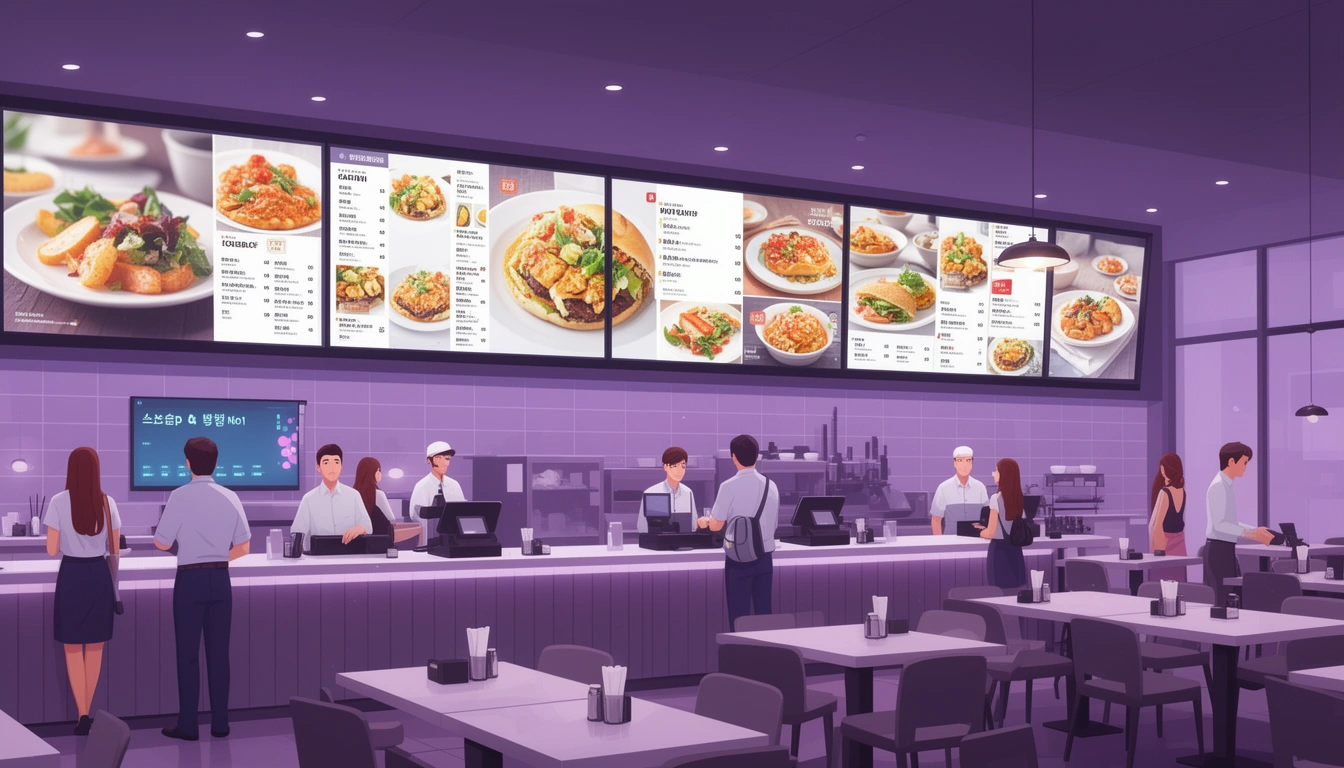
Digital menu board screens have revolutionized how restaurants communicate with customers, replacing static printed menus with dynamic, eye-catching displays. Whether you're running a quick-service restaurant, café, or fast-casual establishment, understanding digital menu boards can help you make informed decisions about modernizing your business in 2026.
What Are Digital Menu Board Screens?
Digital menu board screens are electronic displays that showcase your restaurant's menu items, prices, promotions, and branding through high-definition screens. Unlike traditional printed menus, these screens allow you to update content instantly, display animated graphics, and even schedule different menus for various times of the day.
Modern digital menu boards range from simple single-screen setups to sophisticated multi-screen video walls that create immersive customer experiences. They're controlled through specialized software that lets you manage content remotely, making them ideal for single locations or multi-outlet operations.
Key Benefits of Digital Menu Board Screens
Instant Menu Updates
Gone are the days of reprinting menus every time you change prices or add new items. With digital screens, you can update your entire menu in seconds from a computer or mobile device. This flexibility is particularly valuable during supply chain disruptions or when running time-sensitive promotions.
Increased Sales Through Visual Appeal
High-quality images and videos of your dishes can increase customer appetite and drive higher-value orders. Studies show that digital menu boards can boost sales by 3-5% simply through better visual presentation. Dynamic content captures attention more effectively than static displays, encouraging customers to explore your full menu.
Reduced Perceived Wait Times
Engaging digital content keeps customers entertained while they wait in line, making wait times feel shorter. You can display promotional videos, customer testimonials, or even nutritional information to keep guests informed and engaged.
Dayparting Capabilities
Schedule different menus for breakfast, lunch, and dinner without any manual intervention. Your digital menu boards automatically switch content based on time, ensuring customers always see relevant offerings. This feature is essential for restaurants serving multiple dayparts.
Cost Savings Over Time
While the initial investment is higher than printed menus, digital menu boards eliminate ongoing printing costs. For restaurants that frequently update menus or run seasonal promotions, the return on investment typically occurs within 12-18 months.
Types of Digital Menu Board Screens
LCD Displays
The most common type, LCD screens offer excellent image quality at affordable prices. They're suitable for indoor environments and come in sizes ranging from 32 to 86 inches. LCD displays are ideal for counter-service restaurants and cafés with moderate ambient lighting.
LED Displays
LED screens provide superior brightness, making them perfect for outdoor installations or locations with high ambient light. They're more expensive than LCD but offer better visibility and longer lifespans. Drive-thru menu boards typically use LED technology for maximum readability.
Video Walls
Multiple screens combined to create a large, seamless display. Video walls make powerful visual statements and work well in high-volume quick-service restaurants. They allow you to display multiple menu sections simultaneously or create stunning full-screen promotional content.
Outdoor-Rated Screens
Specially designed to withstand weather conditions, these screens are essential for drive-thru lanes, outdoor patios, or street-facing installations. They feature enhanced brightness, weatherproof enclosures, and temperature regulation systems.
Essential Features to Look For
Cloud-Based Content Management
Choose systems that offer cloud-based management so you can update menus from anywhere. This feature is crucial for restaurant owners managing multiple locations, allowing centralized control over all displays.
Template Libraries
Quality digital menu board software includes pre-designed templates that make content creation easy, even without graphic design experience. Look for systems offering food service-specific templates that follow menu board best practices.
Integration Capabilities
Your digital menu boards should integrate with your POS system to ensure pricing accuracy and inventory management. When items sell out, your menu can automatically update to reflect availability. Integration options streamline operations and reduce manual updates.
Playlist Scheduling
Advanced scheduling lets you create content playlists that change based on time, day, or even weather conditions. Promote hot coffee on cold mornings or refreshing beverages during afternoon heat automatically.
Analytics and Reporting
Track which menu items get the most visual attention and measure how content changes impact sales. Data-driven insights help you optimize your menu board strategy over time.
Implementation Best Practices
Strategic Screen Placement
Position screens at eye level and ensure they're visible from queue lines and ordering points. Avoid placing them where glare from windows or bright lights reduces readability. Consider customer flow patterns and sightlines when planning installation.
Readable Font Sizes
Menu items should be readable from at least 10 feet away. Use font sizes of at least 100-120 pixels for item names and 80-100 pixels for descriptions. Avoid overly decorative fonts that sacrifice legibility for style.
Limit Information Overload
Display 6-8 items per screen maximum to avoid overwhelming customers. If you have an extensive menu, rotate content or use multiple screens to organize offerings by category. White space is your friend don't try to cram too much information onto each screen.
Consistent Branding
Maintain your brand colors, logo, and visual identity across all digital menu content. Consistency builds brand recognition and creates a professional appearance that customers trust.
Regular Content Updates
Keep content fresh by updating promotional items weekly and rotating featured dishes monthly. Static content that never changes loses its effectiveness over time, so establish a content calendar.
Digital Menu Boards vs. Other Digital Solutions
While digital menu board screens excel at in-store communication, they're just one part of a comprehensive digital strategy. Many restaurants combine digital menu boards with digital menus for online ordering and contactless menu ordering systems for dine-in guests.
Digital menu boards focus on the ordering counter experience, while digital menus on mobile devices enhance the table service experience. Using both creates a seamless, modern customer journey from arrival to payment.
Cost Considerations for 2026
Digital menu board screen costs vary significantly based on size, type, and features:
- Hardware: $500-$3,000 per screen depending on size and quality
- Software: $20-$100 per screen per month for content management systems
- Installation: $200-$1,000 per screen including mounting and cabling
- Content Creation: $500-$2,000 for initial professional design (or DIY with templates)
For a typical small restaurant with two menu board screens, expect an initial investment of $2,500-$8,000 plus ongoing software fees. The investment pays off through increased sales, reduced printing costs, and improved operational efficiency.
Choosing the Right Solution
When selecting digital menu board screens, consider your restaurant type, budget, and technical capabilities. Quick-service restaurants benefit most from multiple screens showcasing the full menu, while cafés might need just one or two screens highlighting specialty drinks and featured items.
Integration with your existing systems is crucial. Platforms like Digital Eatery's online ordering system can complement your digital menu boards by ensuring consistent pricing and promotions across all customer touchpoints.
Future Trends in Digital Menu Boards
As we move through 2026, expect to see artificial intelligence driving personalized menu recommendations based on time of day, weather, and popular items. Touchscreen menu boards are becoming more common in self-service environments, while integration with mobile apps creates personalized experiences.
Sustainability features are also emerging, with energy-efficient displays and eco-friendly content highlighting environmentally conscious menu options. These trends align with consumer preferences for technology that enhances convenience while supporting responsible business practices.
Getting Started with Digital Menu Boards
If you're ready to implement digital menu board screens, start with a pilot program using one or two screens at your highest-traffic ordering point. Monitor sales data and customer feedback to refine your approach before expanding.
Work with vendors who offer training and support, especially if your team lacks technical experience. The best digital menu board solutions are intuitive enough for any staff member to update, ensuring you can maintain fresh, accurate content without external help.
Digital menu board screens represent a powerful investment in your restaurant's future, combining marketing, operations, and customer experience into one dynamic tool. Whether you're modernizing an existing location or planning a new restaurant, digital menu boards should be part of your technology strategy for 2026 and beyond.
Published with LeafPad